Comprehending the Perks and Innovations in the Aluminum Foundry Sector
The Aluminum Foundry industry plays a vital duty in modern manufacturing. Its lightweight homes especially enhance fuel effectiveness, especially in automotive and aerospace markets. Additionally, Aluminum's resistance to deterioration guarantees durability in different applications. As the market develops, advancements such as innovative recycling and additive production are improving manufacturing techniques. Checking out these innovations reveals not just the benefits but also the challenges ahead for Aluminum factories in a quickly altering market.
The Lightweight Advantage of Aluminum
Aluminum's lightweight nature uses substantial advantages across different markets, especially in production and transportation. Its low thickness permits for the manufacturing of components that are less complicated to set up and manage, leading to decreased labor costs and enhanced performance. In the vehicle industry, lighter cars add to boosted fuel economy and reduced discharges, aligning with global sustainability objectives. Likewise, in aerospace, using Aluminum lowers the general weight of aircraft, which is essential for boosting performance and decreasing functional prices.
Additionally, Aluminum's light-weight properties promote ingenious designs that were formerly unfeasible with larger materials. This versatility enables makers to develop complicated forms and structures while preserving architectural integrity. Generally, the lightweight advantage of Aluminum not just enhances product efficiency yet also drives developments in modern technology and layout, making it a preferred product in various applications.
Deterioration Resistance and Durability
The Aluminum Foundry market is renowned for generating materials with remarkable deterioration resistance, making them optimal for numerous applications. This property, integrated with boosted architectural integrity, adds to the resilient efficiency advantages that Aluminum parts offer. Because of this, industries increasingly rely upon Aluminum to satisfy requiring ecological problems without jeopardizing top quality.
Superior Deterioration Resistance
While numerous steels encounter substantial obstacles from ecological variables, Aluminum attracts attention for its exceptional deterioration resistance, making it a recommended choice in lots of applications. This residential or commercial property is mainly because of a natural oxide layer that bases on the Aluminum surface, providing an obstacle versus wetness and destructive agents. Unlike various other steels that might rust or degrade over time, Aluminum maintains its honesty also in extreme environments, such as industrial setups or seaside areas. Additionally, its light-weight nature incorporated with rust resistance makes it optimal for applications in aerospace, automobile, and marine sectors. Generally, Aluminum's phenomenal longevity not just improves item durability but additionally reduces upkeep prices, offering a compelling advantage for suppliers and consumers alike.
Improved Architectural Stability
Developers and engineers increasingly identify the significance of enhanced architectural integrity in contemporary applications, where both corrosion resistance and longevity are important. Aluminum alloys, known for their light-weight residential properties, additionally exhibit remarkable resistance to deterioration, making them appropriate for rough atmospheres. The cutting-edge techniques utilized in the Aluminum Foundry sector contribute substantially to producing elements with improved sturdiness. Advanced casting procedures and alloy compositions are customized to fulfill details performance demands, ensuring that structures can stand up to severe conditions without compromising stability. Surface area therapies and coatings enhance the life expectancy of Aluminum products, additionally minimizing deterioration over time. This concentrate on enhanced structural stability not just extends the usability of materials however additionally lowers maintenance costs, solidifying Aluminum's setting as a material of selection in various sectors.
Long-lasting Performance Conveniences
Resilient performance in Aluminum elements is mainly credited to their remarkable corrosion resistance and sturdiness. Unlike several steels, Aluminum normally develops a protective oxide layer, which prevents corrosion and degeneration in different atmospheres, including aquatic and commercial setups. This integral home considerably extends the life-span of Aluminum items, reducing maintenance and substitute expenses. On top of that, the light-weight nature of Aluminum boosts its applicability throughout industries without compromising toughness. The product's resistance to deterioration likewise adds to its integrity popular applications, making it an optimal option for automobile, aerospace, and building markets. As sectors increasingly prioritize sustainability and durability, Aluminum's performance advantages line up with modern engineering needs, strengthening its function in cutting-edge manufacturing processes.
Environmental Influence and Sustainability
 As the Aluminum Foundry sector develops, it significantly prioritizes environmental impact and sustainability, recognizing the requirement for liable practices despite environment change. Efforts to lessen waste and power consumption are at the leading edge, with lots of factories taking on reusing initiatives to recover Aluminum scrap. This not just minimizes resources usage but likewise significantly reduces down energy expenditure, as recycled Aluminum needs only a portion of the power contrasted to key manufacturing.
Innovations in exhausts regulate modern technologies are being applied to lower air toxins, straightening procedures with more stringent ecological guidelines. Factories are likewise checking out alternative energy sources, such as solar and wind, to power their facilities sustainably. By cultivating cooperation with stakeholders, the sector intends to establish innovative solutions that enhance eco-friendly stewardship. Collectively, these initiatives highlight a commitment to lowering the Aluminum Foundry's carbon impact while advertising a circular economic climate within the manufacturing sector.
Advanced Production Techniques
 Reinventing production procedures, the Aluminum Foundry market is increasingly incorporating sophisticated production methods to enhance performance and precision. Strategies such as computer mathematical control (CNC) machining and additive manufacturing have emerged as crucial elements in maximizing production operations. CNC machining enables high-precision part fabrication, substantially decreasing product waste and manufacturing time. At the same time, additive production opens up brand-new avenues for intricate geometries and light-weight styles that were formerly difficult to achieve.
Additionally, the deployment of automation and robotics in Aluminum factories streamlines procedures, decreases human error, and enhances employee safety and security. These modern technologies help with an even more receptive production atmosphere, making it possible for producers to adjust promptly to market needs. The integration of sophisticated simulation software program further enhances the style and screening stages, causing superior product high quality. Jointly, look at this now these strategies not just boost functional efficiency but likewise foster technology, placing the Aluminum Foundry sector at the forefront of modern-day manufacturing.
Developments in Recycling Procedures
The Aluminum Foundry market is not only advancing in making techniques but is additionally making significant strides in reusing procedures. Developments are arising to boost the effectiveness of recycling methods, reducing power Get More Info intake and enhancing sustainability. Advanced sorting technologies, such as automated optical sorting, enable the recognition and splitting up of Aluminum from other products with high accuracy. This causes a greater top quality of recycled Aluminum, which is crucial for keeping the stability of the last items.
Closed-loop recycling systems are being carried out, allowing suppliers to reuse Aluminum scrap within their very own production processes. This minimizes waste and advertises a round economy. In addition, research study right into new recycling strategies, such as hydrometallurgical processes, offers the capacity for recovering Aluminum from complicated waste streams. These developments not only add to decreasing the carbon impact of the Aluminum Foundry sector however also bolster its financial practicality in a progressively eco mindful market.
Applications Throughout Different Industries
Numerous sectors are increasingly identifying the convenience and advantages of Aluminum Foundry products, causing widespread applications across fields such as automotive, consumer, aerospace, and building items. In the automotive industry, Aluminum castings contribute to lightweight automobile layouts, boosting gas efficiency and performance. Aerospace producers use Aluminum parts for their strength-to-weight proportion, important for aircraft structures and elements.
In building, Aluminum is preferred for its sturdiness and resistance to corrosion, making it optimal for window frameworks, roof, and architectural assistances. Customer products likewise gain from Aluminum Foundry products, as seen in cookware, electronic devices, and product packaging, where light-weight and recyclable products are crucial.
The versatility of Aluminum Foundry methods permits precise specifications and intricate layouts, accommodating the diverse needs of these industries. As an outcome, Aluminum Foundry items are coming to be important to contemporary manufacturing procedures throughout different sectors.
Future Trends in Aluminum Foundries
As industries remain to evolve, Aluminum factories are positioned to accept several key fads that guarantee to enhance efficiency and sustainability. One noticeable pattern is the enhancing fostering of electronic technologies, including automation and synthetic intelligence, which enhance operations and boost quality assurance. Additionally, the press towards lasting methods is leading foundries to spend in recycling modern technologies, substantially minimizing waste and energy intake.
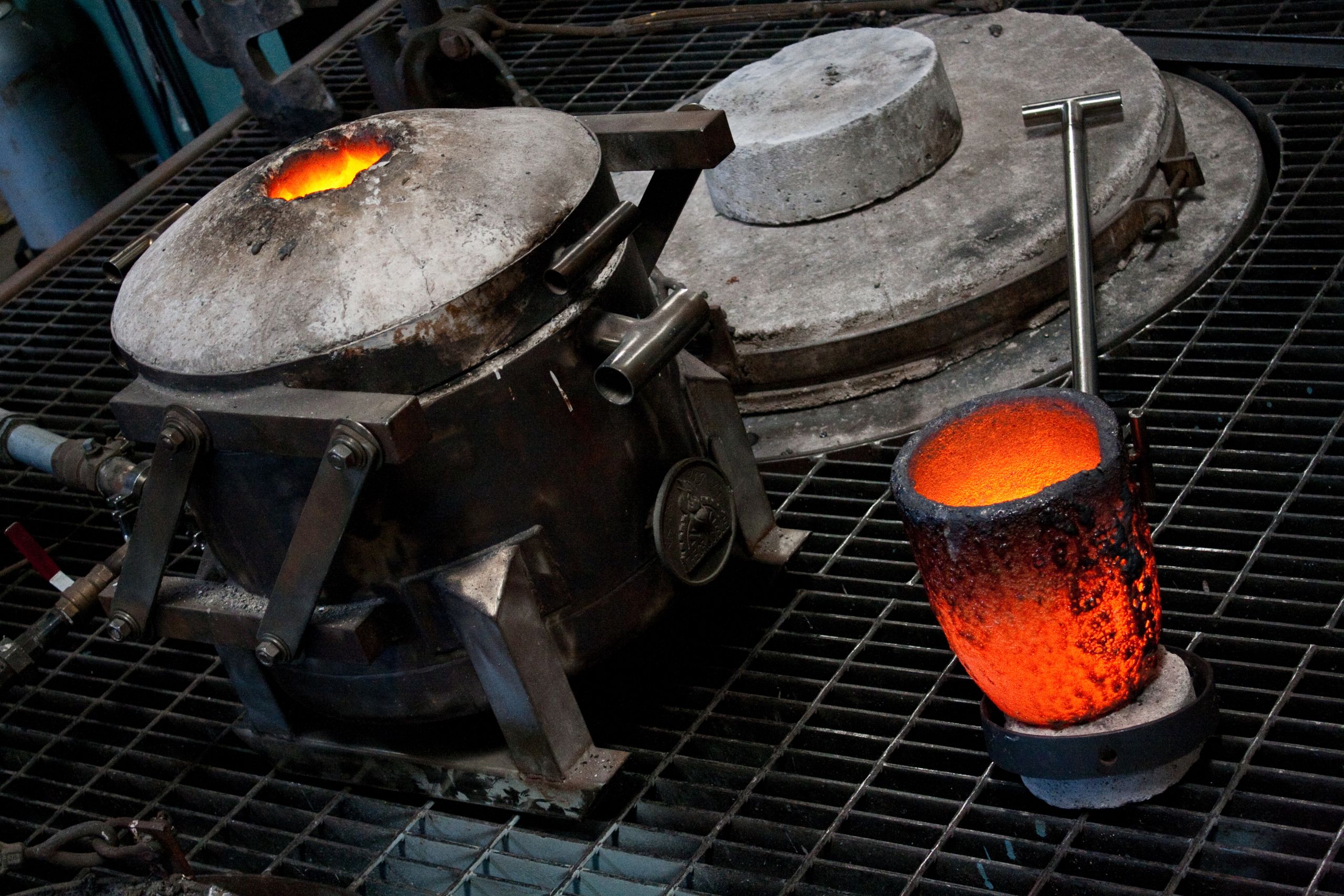 Another emerging fad is making use of innovative alloys and materials, dealing with the expanding need for lightweight and sturdy parts across different fields (Aluminum Foundry). Furthermore, the assimilation of additive manufacturing techniques is prepared for to transform component design, using customization and decreasing preparations
Partnership with research study establishments is likewise anticipated to drive innovation, as factories seek to establish new procedures and products. Aluminum Foundry. Collectively, these fads suggest a transformative future for the Aluminum Foundry industry, lining up with look here wider objectives of sustainability and performance
Regularly Asked Concerns
What Are the Common Prices Related To Aluminum Foundry Manufacturing?
The regular costs related to Aluminum Foundry production consist of basic materials, labor, power, tools upkeep, and overhead expenditures. These variables jointly influence the general monetary investment required for efficient Aluminum spreading procedures.
Exactly How Does Aluminum Compare to Other Metals in Strength?
Aluminum, while lighter than many steels, shows impressive strength-to-weight proportions. Contrasted to steel, Aluminum is less solid yet uses exceptional rust resistance, making it a positive option in applications where weight and toughness are necessary.
What Precaution Remain In Location in Aluminum Foundries?
Precaution in Aluminum foundries generally consist of required individual protective devices, ventilation systems to control fumes, normal devices upkeep, training programs for staff members, and adherence to stringent safety laws to reduce risks related to molten steel handling.
Exactly How Is Top Quality Control Managed in Aluminum Casting Processes?
Quality assurance in Aluminum spreading procedures includes extensive assessments at different phases, including resources analysis, procedure monitoring, and end product screening. Techniques such as statistical procedure control and non-destructive testing warranty adherence to industry requirements.
What Certifications Are Necessary for Aluminum Foundry Providers?
The relevance of certifications for Aluminum Foundry vendors includes ISO 9001 for high quality monitoring, ISO 14001 for environmental management, and industry-specific requirements like ASTM and SAE, guaranteeing conformity, safety and security, and dependability in producing processes.
The Aluminum Foundry sector plays a crucial function in modern production. The Aluminum Foundry industry is renowned for creating products with premium corrosion resistance, making them suitable for numerous applications. Transforming manufacturing procedures, the Aluminum Foundry industry is progressively integrating sophisticated production strategies to enhance efficiency and precision. The Aluminum Foundry market is not just progressing in making strategies yet is additionally making significant strides in recycling processes. As industries continue to develop, Aluminum factories are positioned to accept numerous vital trends that promise to improve effectiveness and sustainability.
Comments on “Aluminum Foundry Wisconsin ensures dependable casting services”